commercial fire door requirements
2026-01-23
Fire doors are critical facilities for fire compartmentation in buildings. Their fundamental requirements encompass fire integrity, thermal insulation, sealing performance, opening/closing functionality, and signage management.
Core Performance Requirements
Fire Resistance Performance (The Most Critical Requirement)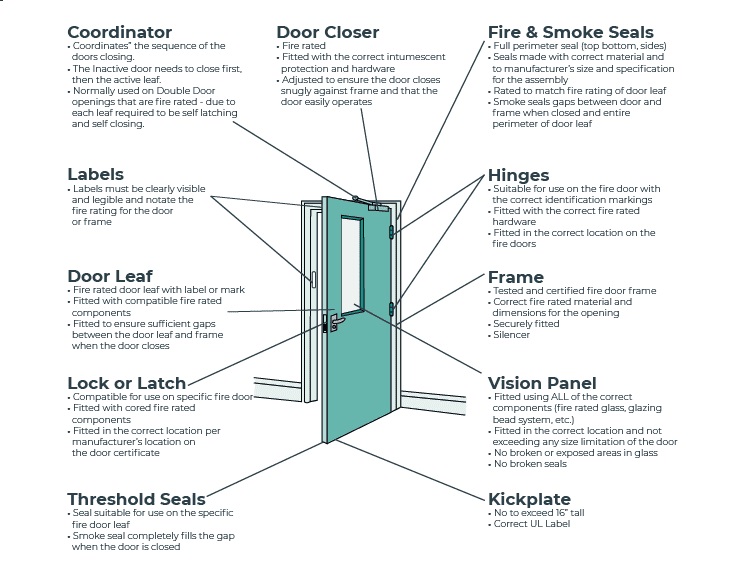
Fire doors are classified into three grades based on their fire resistance rating, which must be tested by nationally certified testing institutions:
Class A Fire Door: Fire resistance limit ≥ 1.50 hours
Class B Fire Door: Fire resistance limit ≥ 1.00 hours
Class C Fire Door: Fire resistance limit ≥ 0.50 hours
Fire resistance performance includes two aspects:
Fire Integrity: Prevents collapse, penetrating cracks, or holes during a fire, stopping flame penetration.
Thermal Insulation: The average temperature rise on the unexposed face does not exceed 140°C, and the maximum point temperature rise does not exceed 180°C, preventing heat transfer from igniting materials on the other side.
Material and Structure
Wooden Fire Doors: Use high-quality timber or fire-resistant panels treated with flame retardants. Door frames, door leaf skeletons, and filler materials must all be fire-treated.
Steel Fire Doors: Door frames and leaf panels are made of cold-rolled steel sheets, filled with non-toxic, harmless fire-resistant and thermal insulating materials (e.g., perlite boards, rock wool).
Steel-Wood Fire Doors and other materials: Must meet corresponding standards.
Key Component Requirements
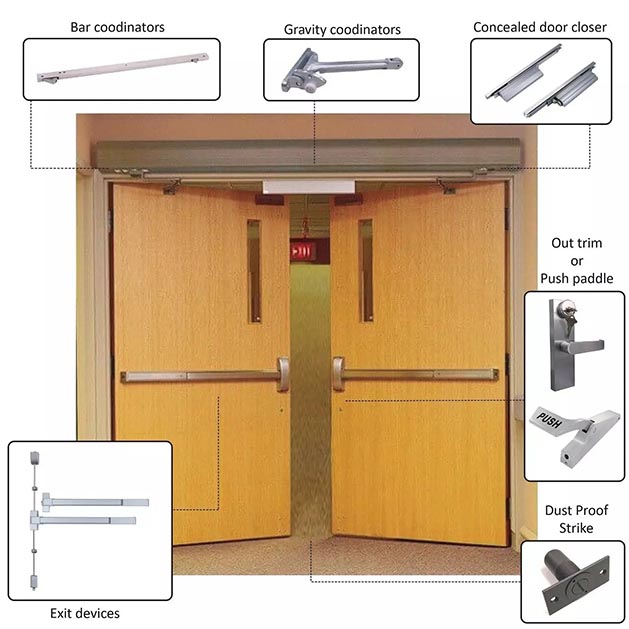
Fire Lock: Must use fire-rated locks, typically requiring a fire resistance time matching the door leaf. Fire doors on escape routes should be equipped with panic bar (or push-pad) type fire exit hardware, allowing egress from inside with a single action (push or pressure) without a key or tool.
Fire Hinges: Must use fire-rated hinges. The quantity is configured based on door leaf size and weight (usually no less than 3), with load-bearing capacity ensuring the leaf does not deform or detach during a fire.
Fire Door Closer: Normally closed fire doors must be equipped with automatic closers, ensuring the door leaf closes automatically and reliably to a sealed state after being opened. Special areas (e.g., hospital corridors) may use coordinated closers.
Door Coordinator: Used for pairs of doors or multi-leaf fire doors to ensure leaves close in the correct sequence for proper sealing.
Fire Seal (Intumescent Strip): Fire-rated intumescent seals must be installed in the gaps between the door frame and leaf. Upon exposure to high heat in a fire, the seal expands rapidly (multiple times its size) to block gaps and prevent smoke penetration.
Usage and Management Requirements
Specifications for Open/Closed Status
Normally Closed Fire Doors:
Most fire doors located in stairwells, lobbies (anterooms), corridors, etc., should be normally closed and remain sealed. Keeping them propped open is strictly prohibited.
Normally Open Fire Doors:
In high-occupancy areas (e.g., hospital lobbies, main mall passages) for ease of traffic flow, they may be set to normally open. However, they must:
Interface with the fire alarm system to close automatically upon receiving a signal.
Be equipped with devices like electrically powered hold-open releases or electromagnetic door holders.
Also have a manual closing function.
Routine Maintenance
Fire doors and their components (closers, hinges, seals, etc.) must not be damaged, removed, or altered.
No ordinary bolts, locks, or other devices impeding closure should be added to the door leaf.
No thresholds, steps, or stored items should obstruct passage or closure in the doorway area.
Regular inspections should ensure closers function correctly, doors close smoothly, and sealing is effective.
Common Application Locations (Reference)
Class A Fire Doors: Used for openings in fire walls between compartments, doors to stairwells and lobbies, doors to critical equipment rooms (e.g., fire pump rooms, electrical rooms, boiler rooms).
Class B Fire Doors: Used for doors from corridors leading to lobbies or stairwells, entrance doors to high-rise residential units (if required), access doors for vertical shafts (e.g., cable/pipeline shafts) providing compartmentation between floors.
Class C Fire Doors: Mainly used for inspection doors on vertical pipe shafts (e.g., for utilities, ducts) to prevent vertical flame spread.